
Migrating to GCP: The 2026 Data Warehouse Strategy Guide
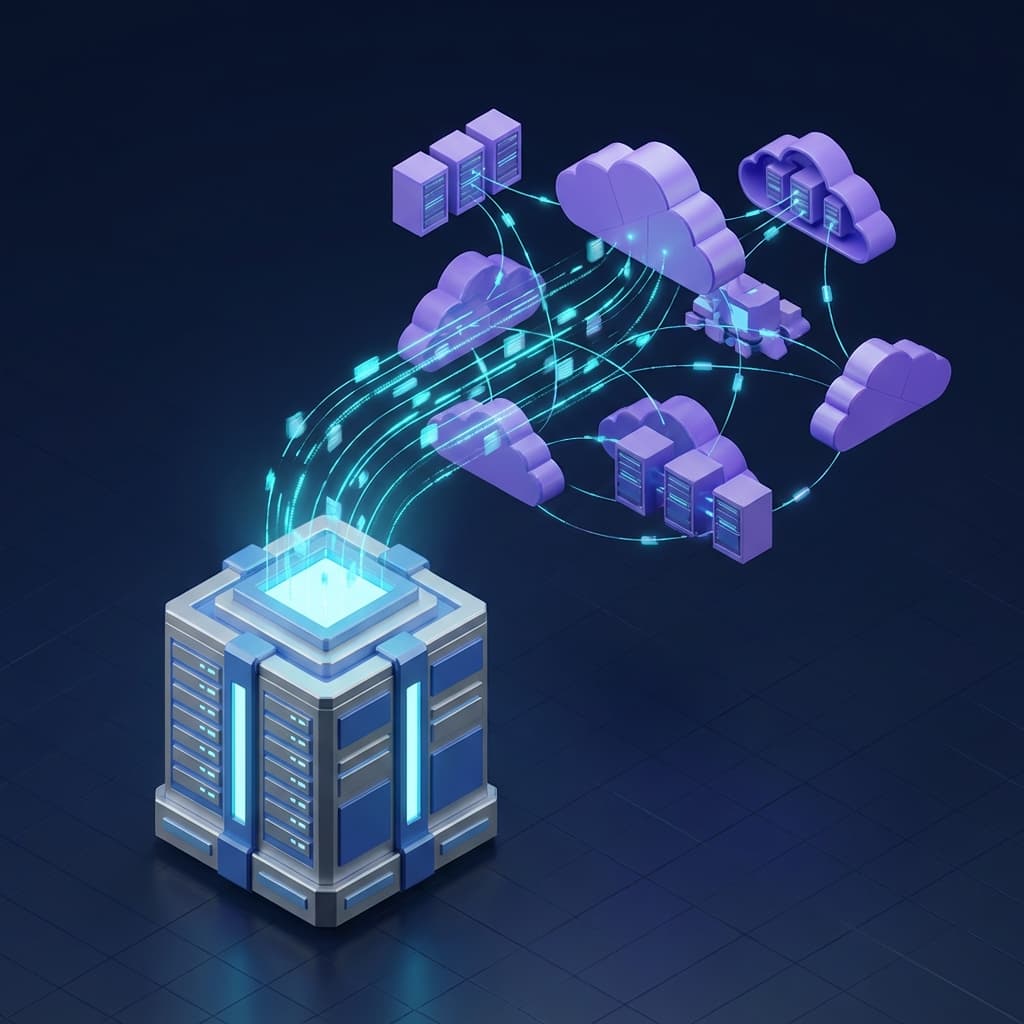
The "Lift and Shift" Trap
It’s the most common story in modern IT: An enterprise decides to "go cloud." They sign a multi-million dollar contract with Google Cloud Platform (GCP). They devote 18 months to moving every terabyte of on-premise data exactly as-is into the cloud.
And then the bills start coming.
Instead of the promised cost savings and agility, they find themselves with a cloud-hosted legacy system—expensive, sluggish, and just as hard to manage as the bare metal servers they left behind.
Migration isn't just about changing where your data lives; it's about changing how your data works. If you treat BigQuery like an on-premise SQL Server, you aren’t migrating. You’re just renting more expensive hard drives.
In 2026, successful data warehouse migration is a strategic reset. It’s the moment you stop managing infrastructure and start managing intelligence.
Why BigQuery Changes the Equation
Before we dive into how, let’s clarify why GCP’s BigQuery is the target of choice for modern data strategies.
Traditional warehouses couple storage and compute. If you want to store more history, you have to buy more CPU power, even if you rarely query that history. BigQuery decouples them completely. You pay pennies for storage (especially long-term) and pay for compute only when you run a query.
This architecture enables:
- Zero-Management Infrastructure: No indexes to rebuild, no vacuums to run, no servers to patch.
- Real-Time Ingestion: Streaming data becomes a native capability, not a bolted-on hack.
- Built-in AI/ML: Run machine learning models directly on your data using SQL with BigQuery ML.
The Strategic Framework: A 4-Phase Migration Plan
At Avenia, we’ve recovered dozens of stalled migrations. The difference between failure and success is rarely technical skill—it’s the methodology. Here is the framework we use to ensure value delivery on Day 1.
Phase 1: The Assessment (The Inventory)
The biggest mistake is migrating everything. "We might need it someday" is the enemy of agility.
Before a single line of code is written, you need an honest inventory. We often find that 40-60% of tables in a legacy warehouse haven't been queried in over a year. These are "zombie data" assets—eating up storage and migration budget while providing zero value.
Action Plan:
- Audit Logs Analysis: Parse your query logs (from Teradata DBQL or Oracle AWR) to identify what is actually used. Look for frequency, last-access date, and user breadth.
- Dependency Mapping: Identify which upstream systems feed these crucial tables. Tools like lineage graphers can automate this validation.
- The Purge: Archive the "zombies" to low-cost Coldline storage in GCS. Do not move them to production BigQuery datasets. If nobody asks for them in 6 months, delete them.
Phase 2: The Architecture (Designing for BigQuery)
You cannot simply copy CREATE TABLE statements from Oracle or Teradata to BigQuery. That is the fast lane to performance bottlenecks and skyrocketing costs.
Legacy systems rely heavily on normalization (Star Schemas) to save storage space. But in BigQuery, storage is cheap, and joins are expensive (relatively). The optimal pattern shifts towards denormalization.
Key Technical Shifts:
- Nested & Repeated Fields: Instead of a separate
OrderItemstable, nest the items directly inside theOrderstable record usingSTRUCTandARRAYtypes. This eliminates massive joins and speeds up read performance by 10x+. It moves you from a relational model to a document-relational hybrid that is far more efficient for analytics. - Partitioning: Partition tables by date (e.g.,
transaction_date). This allows BigQuery to scan only the relevant days of data, drastically lowering costs. For example, a query filtering for "yesterday's sales" on a petabyte table will only scan terabytes, costing you pennies instead of dollars. - Clustering: Sort data within partitions (e.g., by
customer_idorregion) to further optimize lookup speeds. This acts like a "micro-index" that speeds up filtering and aggregation.
Phase 3: The Pipelines (Modern Ingestion)
How do you get the data there? Scripts and cron jobs are not a strategy. They are fragile and opaque.
For a robust migration, you need an orchestration layer that handles backfills and incremental loads gracefully. We recommend Dataflow (Apache Beam) for complex streaming transformations or Data Fusion for visual pipeline management. For SQL-heavy transformations, the modern standard is dbt (data build tool).
The Golden Rule: Design for idempotency. If a pipeline fails halfway through, you should be able to re-run it without creating duplicate records. This resilience is critical in the cloud distributed environment.
Recommended Pattern:
- Extract: Load raw data into a "Landing Area" dataset in BigQuery (As-Is).
- Load/Transform: Use dbt to clean, denormalize, and model data into "Curated" and "Consumption" layers.
- Validate: Automated tests run on every batch to check for nulls, uniqueness, and referential integrity.
Phase 4: Validation & Cutover
Trust is hard to gain and easy to lose. If your first dashboard on GCP shows different numbers than the old system, the migration is failed in the eyes of the business.
The Dual-Run Strategy: Don't flip a switch. Run both systems in parallel for a validation period (typically 2-4 weeks).
- Run the daily ETL on both systems.
- Use an automated script to compare row counts and key aggregates (e.g., "Total Revenue yesterday").
- Only when the variance is 0.0% for 14 consecutive days do you decommission the legacy job.
Security & Governance: The Invisible Rails
Migration is the perfect time to fix the security sins of the past. In an on-prem world, security was often "hard shell, soft center"—once you were in the VPN, you could see everything.
GCP allows for a Zero Trust model.
- IAM (Identity and Access Management): granular control down to the table or even column level.
- Column-Level Security: Encrypt PII (Personally Identifiable Information) like social security numbers so that only authorized HR personnel can see them, while data analysts see
NULLor a hash. - Data Catalog: Automatically tag sensitive data. If a column is tagged
SENSITIVE, BigQuery can automatically mask it in query results.
Implementing these controls during migration (not after) ensures you remain compliant with GDPR, CCPA, and internal policies from Day 1.
Modernization vs. Migration
The goal of this journey isn't to reach the cloud; it's to reach a state of continuous innovation.
Once you are on GCP, the ceiling lifts. You can start integrating Vertex AI to predict customer behavior rather than just reporting on it. You can share live datasets with partners using Analytics Hub without building FTP servers. You can analyze petabytes of log data in seconds to detect security threats.
Migration is the heavy lift. Modernization is the perpetual reward.
Ready to Make the Move?
Legacy infrastructure is an anchor on your business velocity. Moving to GCP shouldn’t be a leap of faith—it should be a calculated, executed strategy.
At Avenia Consulting, we specialize in high-stakes data migrations. We don't just move your data; we transform your business capabilities.
Contact us today or explore our Data Analytics Services to discuss your migration roadmap. Let's build a data platform that powers your future, not just stores your past.
About Avenia Consulting
Avenia Consulting is a premier partner for Data Strategy, Cloud Engineering, and AI solutions. We help forward-thinking enterprises transform their data into a competitive advantage.